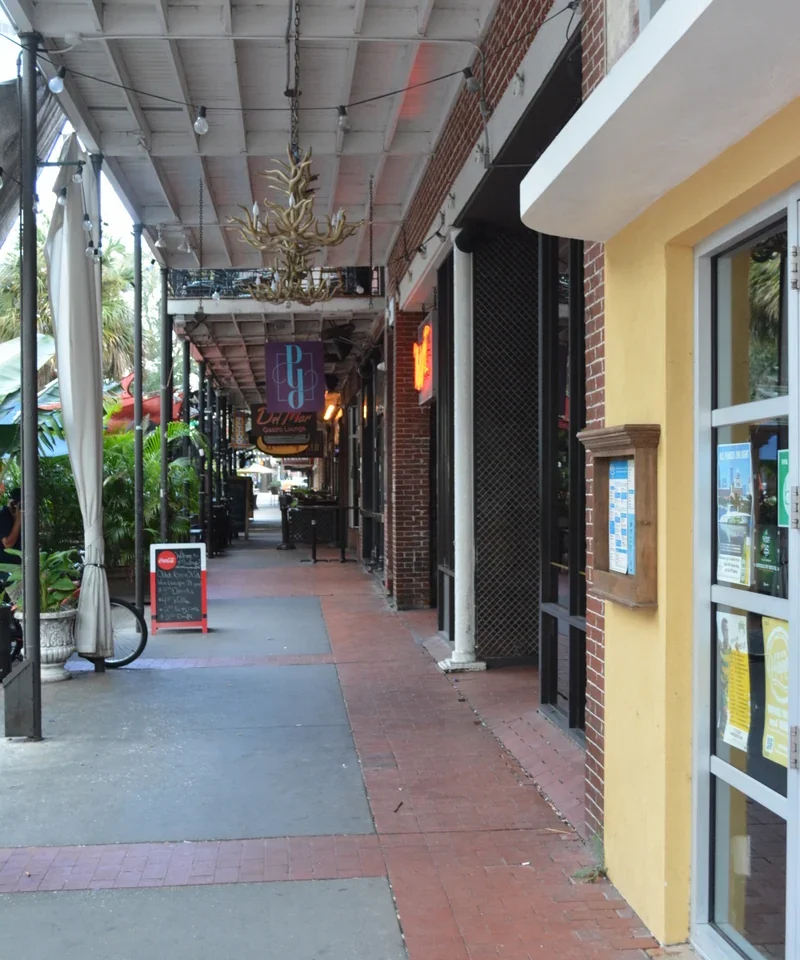
A city street is more than a route between attractions. It is a place to notice how buildings meet the pavement, how people use the space and what makes one stretch feel different from the next. Central Avenue offers a useful starting point for that kind of looking in St. Petersburg, Florida.
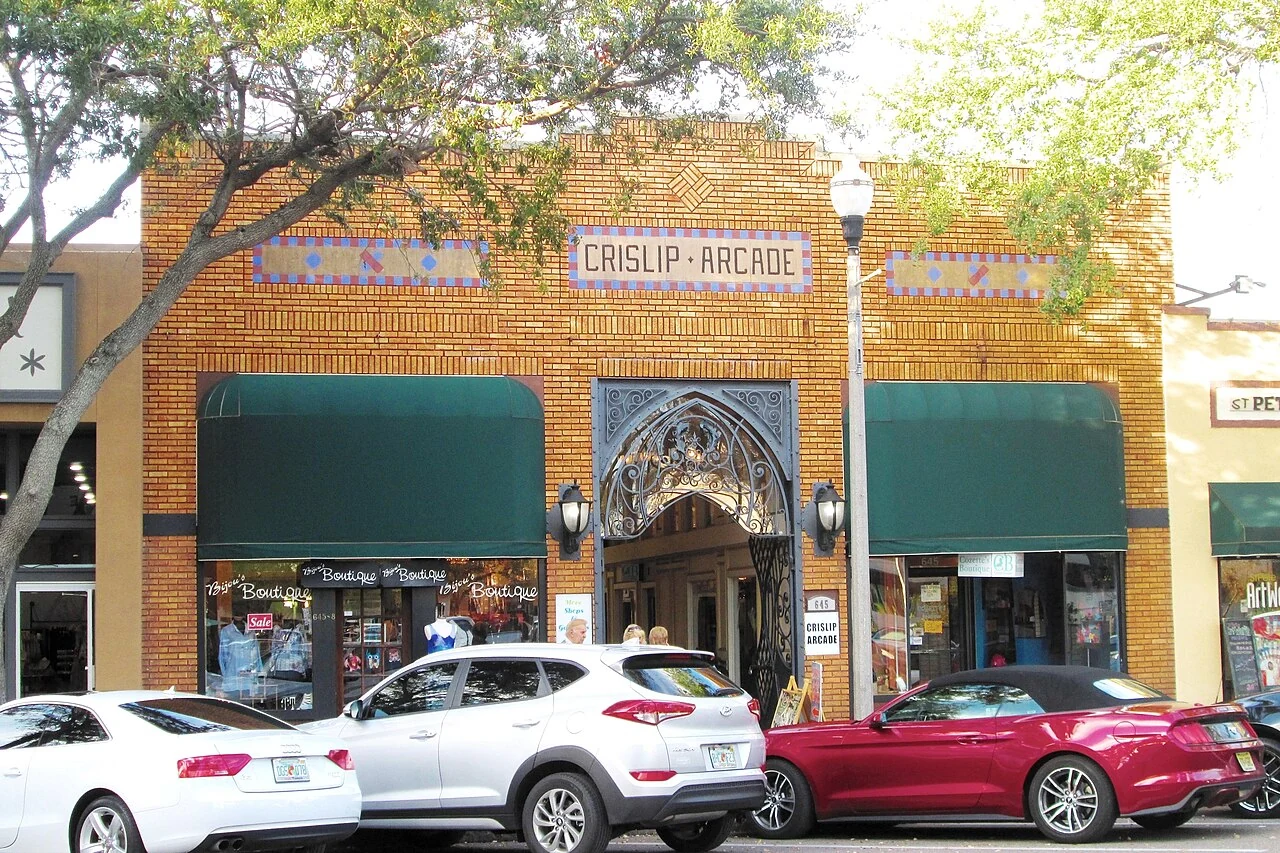
The photograph opening this guide shows Crislip Arcade on Central Avenue in January 2018. It records a particular moment, not a guarantee that every business, sign or arrangement remains the same today. Use the image for architectural context; check a business directly if it is part of your plan.

Guided St. Pete Sightseeing Tour in Deluxe Street Legal Golf Cart
You and your Tour Guide will Cruise through the Streets of Downtown St. Petersburg in a Deluxe Street Legal Golf Cart. You'll Explore the Best Place...

Private St. Petersburg Mural and Street Art Tour by Golf Cart
This experience includes multiple photo stops, giving you plenty of time to step off the cart, pose in front of icon...

St Petersburg Ultimate (ALL-IN-ONE) City Trolley Tour
• FREE admission to the St. Petersburg Museum of History • FREE tastings at the award-winning St. Pete Distiller...

Imagine Museum of Contemporary Glass Art General Admission
Immerse yourself in contemporary glass art at Imagine Museum, featuring breathtaking galleries, an audio tour, a gif...
Choose a manageable stretch
Start with a small area rather than a long list of stops. Look at the actual route and the crossings before setting out. Decide where you might pause, and leave yourself the option to turn back or continue without feeling that you have failed an itinerary.
A short walk can become a worthwhile part of the day if you pay attention. Notice an arcade entrance, a change in material or the way shade falls across a covered sidewalk. You do not have to identify an architectural style to appreciate a well-made threshold.
Let the art keep its context
The city’s visitor resources introduce its art districts and cultural places. Treat that as an invitation to learn more, rather than assuming every studio or gallery welcomes an unannounced visit. Verify any opening or event you hope to attend.
- Ask before photographing someone at work.
- Respect the conditions attached to a gallery or studio visit.
- Credit an artist when sharing a permitted photograph of their work.
- Keep entrances and ordinary business activity unobstructed.
Build a day with two scales
Pair a street-level walk with one more focused visit if that suits your interests. A museum gives you a concentrated subject; time outside lets the day breathe. Compare the actual addresses and practical arrangements before treating two places as easy neighbors.
Our museum-day guide offers questions for choosing that anchor. You can also make the walk the main activity and leave the rest of the afternoon open.
Look without collecting everything
You do not need a photograph of every interesting detail. Try remembering one material, one color and one small relationship between a building and the street. A few observations can give a stronger sense of place than a full camera roll assembled in a hurry.
Give a place a little time before deciding what it means. The first impression is only the beginning.
Before you go
Use the City of St. Petersburg visitor resources for orientation to art districts, cultural sites and transport information. Check individual businesses directly for current details. For the wider geography, read planning a city break in St. Petersburg.
Guided St. Pete Sightseeing Tour in Deluxe Street Legal Golf Cart
You and your Tour Guide will Cruise through the Streets of Downtown St. Petersburg in a Deluxe Street Legal Golf Cart. You'll Explore the Best Place...
Private St. Petersburg Mural and Street Art Tour by Golf Cart
This experience includes multiple photo stops, giving you plenty of time to step off the cart, pose in front of icon...
St Petersburg Ultimate (ALL-IN-ONE) City Trolley Tour
• FREE admission to the St. Petersburg Museum of History • FREE tastings at the award-winning St. Pete Distiller...
Imagine Museum of Contemporary Glass Art General Admission
Immerse yourself in contemporary glass art at Imagine Museum, featuring breathtaking galleries, an audio tour, a gif...